
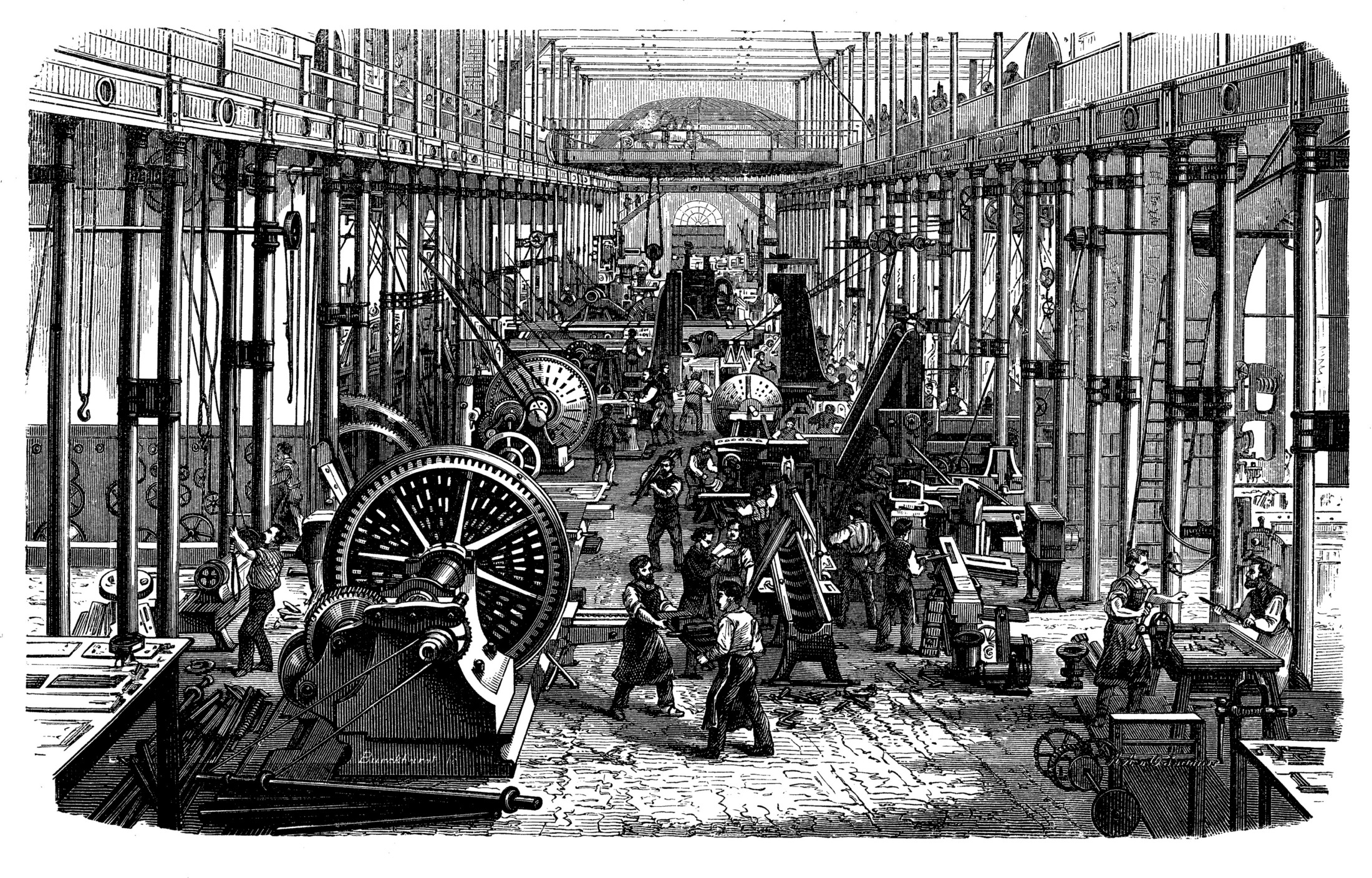
In our first post about the history of manufacturing improvements in the USA, [click here] we talked about how the the constraint back in the earliest days of production was simple. Output was limited by human hands.
That started to change in the late 1700s as consistent power entered the picture. Steam engines gave factories a steady, reliable source of energy that didn’t depend on people or daylight.
Now production didn’t have to stop when people got tired or when daylight ran out. Machines could run longer, and output could scale in a way it never had before.
That solved one problem, but it created a new set of challenges.
Now you had multiple machines running at once. More people working in the same space. More material moving through the process. Everything became more connected.
When something went down, it wasn’t isolated anymore.
A single failure could slow or stop a much larger operation because everything around it depended on that one point holding up. What used to be a local issue became a system problem.
You and I still see that today. Walk into a plant with a centralized process or a shared piece of equipment, and you can feel it. When it’s running well, everything moves. When it’s not, people start waiting, work starts stacking up, and the whole place tightens up.
That’s the tradeoff that came with scale.
By the early 1800s, power had made large-scale production possible. It also raised the cost of downtime.
Keeping things running became just as important as producing in the first place.
Not just making parts, but supporting the process. Better tooling, more reliable setups, tighter coordination between steps. The focus moved from individual output to keeping the whole system moving.
That change never really went away.
The equipment looks different now, but the pressure is the same. When more is connected, more is at risk if something fails.
So the work follows that pressure.
Keep it running. Keep it consistent. Remove the weak points before they turn into bigger problems.
And even with all that progress, one issue was still sitting there.
Next up: Part 3 — When the line made problems impossible to ignore.