
How Rhino Tool House Helped a Manufacturer Improve Assembly Efficiency, Product Quality, and Workplace Safety
In today’s competitive manufacturing environment, even a seemingly simple assembly process can create costly bottlenecks that impact productivity, quality, and profitability. Manufacturers are under constant pressure to increase throughput, reduce defects, improve worker safety, and maintain consistent product quality—all while controlling operational costs.
One manufacturer was facing these exact challenges during the installation of bushings into fork truck mast pivots. What appeared to be a routine assembly operation was causing excessive rework, inconsistent quality, and production slowdowns.
By partnering with Rhino Tool House, the company was able to transform its assembly process through custom-engineered tooling and automation solutions that delivered measurable results.
The Challenge: Manual Assembly Was Limiting Production Efficiency
The manufacturer relied on a manual pressing operation to install bushings into fork truck mast pivots. Although the process had been in place for years, production demands had increased significantly, exposing weaknesses in the existing workflow.
The company was experiencing:
- Inconsistent bushing placement and alignment
- Excessive assembly cycle times
- High levels of rework and scrap
- Operator fatigue from repetitive tasks
- Increased ergonomic concerns
- Production bottlenecks affecting downstream operations
- Difficulty maintaining quality standards during high-volume production
Each assembly depended heavily on operator skill and judgment. Even minor alignment variations could result in damaged components, improperly seated bushings, or rejected parts.
The manufacturer needed a more reliable and repeatable process that would improve quality while increasing production capacity.
Identifying the Root Cause
Rhino Tool House specializes in helping manufacturers solve complex production challenges through custom automation, ergonomic workstations, industrial tooling, and engineered manufacturing solutions.
Before recommending equipment or automation, Rhino Tool House engineers conducted a detailed evaluation of the existing assembly process.
The team analyzed:
- Operator workflow and movement
- Part handling procedures
- Assembly station design
- Press alignment and positioning
- Quality control checkpoints
- Ergonomic risks
- Production throughput metrics
The analysis revealed that the primary issue was not operator performance—it was process variability.
The manual setup required operators to repeatedly align components by hand, introducing inconsistencies into every production cycle. The existing workstation lacked the precision tooling and process controls necessary to achieve repeatable results.
The Solution: Custom Assembly Tooling and Process Optimization
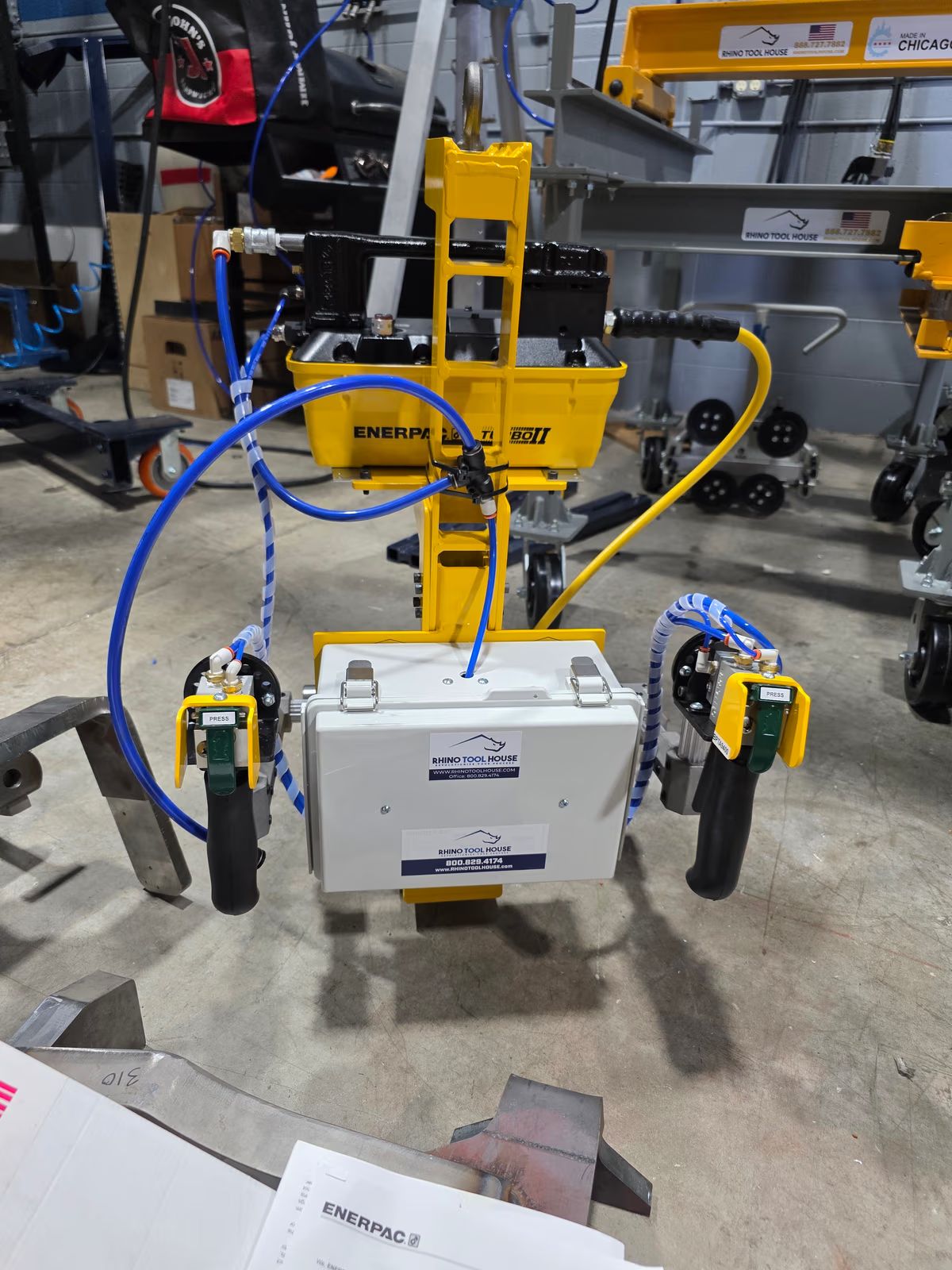
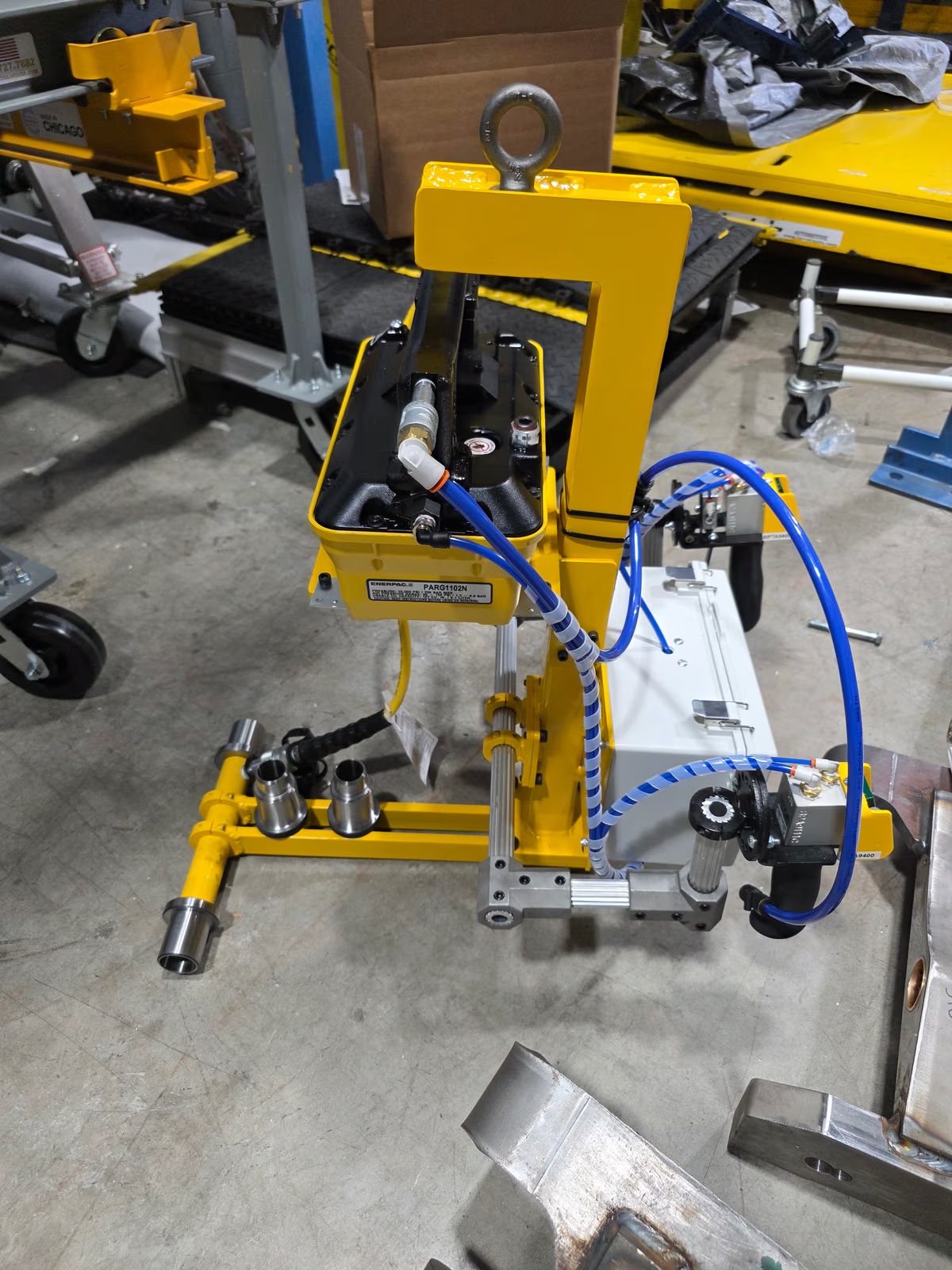
To address these challenges, Rhino Tool House designed and implemented a custom manufacturing solution tailored specifically to the customer’s application.
Precision Assembly Fixtures
Custom fixtures were engineered to accurately locate and secure components before each pressing operation.
Benefits included:
- Consistent part positioning
- Improved assembly accuracy
- Reduced operator dependency
- Faster setup times
Ergonomic Workstation Design
The new assembly station was designed with ergonomics in mind, reducing repetitive motion and operator strain.
Key improvements included:
- Improved part presentation
- Reduced lifting and reaching
- Better operator positioning
- Enhanced workplace safety
Process Control and Quality Assurance
Built-in process controls ensured proper alignment throughout the assembly cycle.
This helped:
- Reduce assembly defects
- Improve quality consistency
- Minimize rework
- Increase production confidence
Scalable Manufacturing Solution
The solution was designed to support future production growth without requiring significant changes to equipment or workflow.
The Results: Improved Manufacturing Performance
After implementation, the manufacturer experienced significant operational improvements.
Reduced Rework and Scrap
By eliminating alignment variability, the company dramatically reduced the number of defective assemblies and damaged components.
Increased Throughput
Faster assembly cycles allowed production teams to process more units while maintaining quality standards.
Improved Product Quality
Consistent bushing installation resulted in more reliable assemblies and fewer quality concerns.
Enhanced Worker Safety
The ergonomic improvements reduced physical strain and helped create a safer working environment.
Greater Manufacturing Efficiency
The streamlined process reduced bottlenecks and improved overall production flow.
Why Manufacturers Choose Rhino Tool House
Manufacturers across industries partner with Rhino Tool House because of our ability to solve real-world production challenges through engineered solutions.
Our services include:
Custom Automation Solutions
Design and implementation of automation systems that improve productivity and reduce labor-intensive processes.
Industrial Ergonomic Solutions
Workstation design and material handling improvements that enhance worker safety and efficiency.
Assembly Tooling and Fixtures
Custom fixtures, jigs, and tooling engineered for repeatable manufacturing processes.
Material Handling Systems
Solutions that improve workflow, reduce manual handling, and increase throughput.
Manufacturing Process Improvement
Identification and elimination of bottlenecks, waste, and process inefficiencies.
Industrial Safety Solutions
Equipment and systems designed to reduce workplace injuries and improve OSHA compliance.
The Bigger Lesson: Process Improvement Drives Manufacturing Success
Many manufacturers focus on labor, training, or supervision when quality issues arise. However, recurring production challenges are often symptoms of a process that was never optimized for efficiency or consistency.
When operators must compensate for inadequate tooling or workstation design, variability becomes unavoidable.
Investing in custom manufacturing solutions can deliver long-term improvements in:
- Productivity
- Quality control
- Employee safety
- Equipment utilization
- Production capacity
- Operational profitability
The most successful manufacturers understand that sustainable growth comes from improving processes—not simply working harder.