
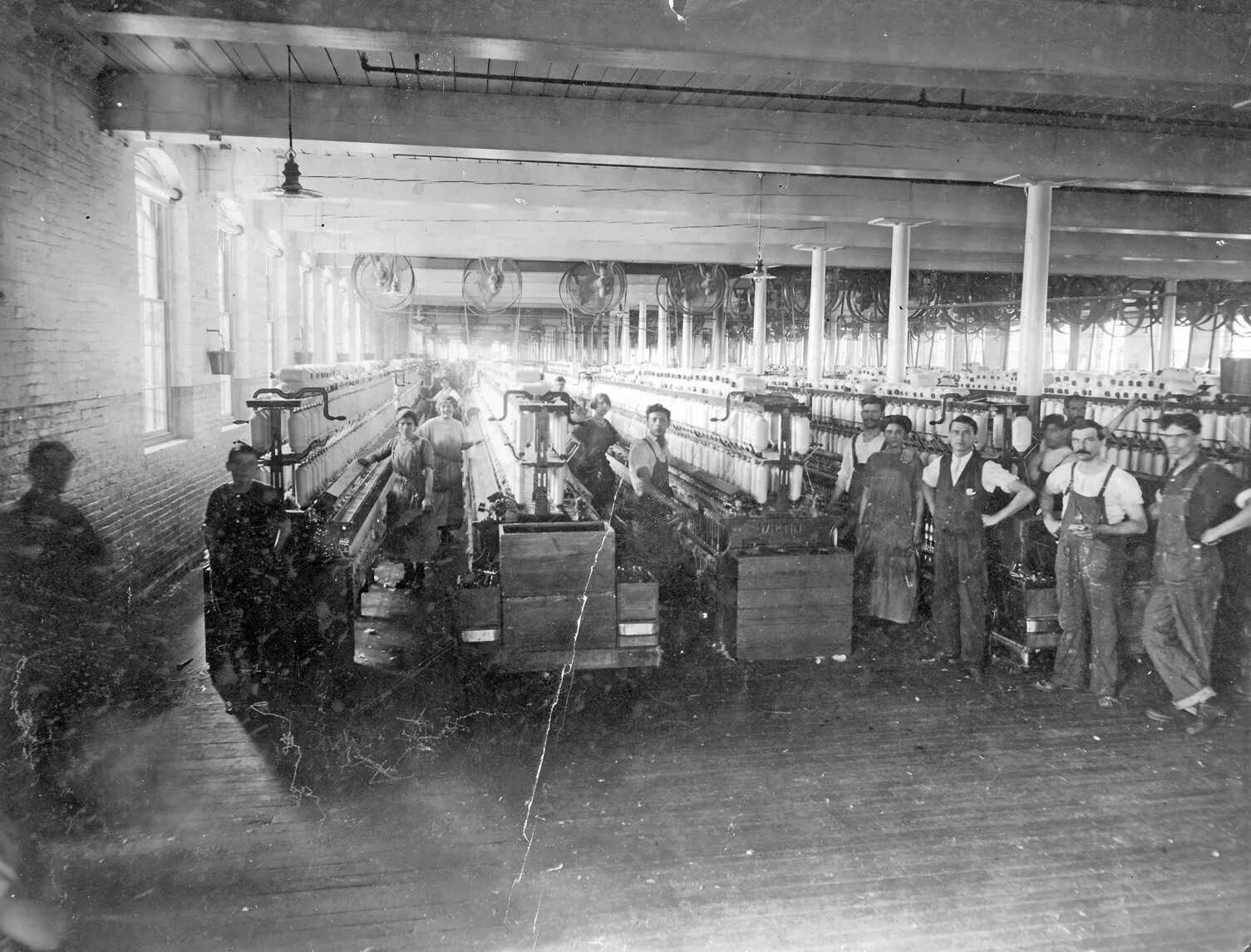
By the late 1800s, power had allowed factories to scale output and run multiple processes at once. Plus, there was this new thing everybody was talking about called electricity. But work was still largely organized around individual stations and loosely connected steps.
That started to evolve in the early 1900s, most clearly with the rise of the moving assembly line, often associated with automotive production around 1913.
Instead of the work moving around the operator, the work began moving through the operation. Parts came in a sequence. Each step depended on the step before it. Timing mattered in a way it didn’t before, because the entire system was now physically linked.
That solved a problem that had been building for decades. Output could increase dramatically, and work became more repeatable. But it also changed how problems behaved. Before the line, inefficiency could sit in one area without immediately affecting everything else. After the line, nothing stayed contained for long.
If one station slowed down, the entire flow backed up. If a step took longer than expected, the constraint didn’t stay local. It moved upstream and downstream until it touched everything.
We of course still see this dynamic in modern plants over one hundred years later.
When we walk a line where takt time is tight, we, and our customers, can feel it immediately. One delay, one missed cycle, one tool issue, and the entire rhythm of production shifts.
And so, back in the day, once variation became visible, it could no longer be ignored. Small inefficiencies turned into bottlenecks. Bottlenecks turned into downtime. And downtime became expensive in a way it hadn’t been before.
That’s where a lot of the next wave of manufacturing thinking came from.
It wasn’t just about producing more product, it was about trying to stabilize the flow. Reducing waste. Standardizing steps. Making sure each station could hold its part of the system without disruption.
But even then, the system was still carrying waste it couldn’t fully see yet. Even with all that progress, one problem was still sitting there like an ugly gremlin fouling up the works .
Next up: Part 4 — When waste became impossible to ignore.